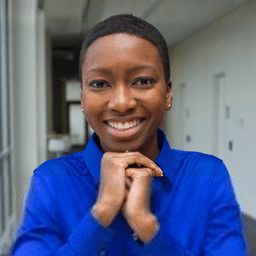
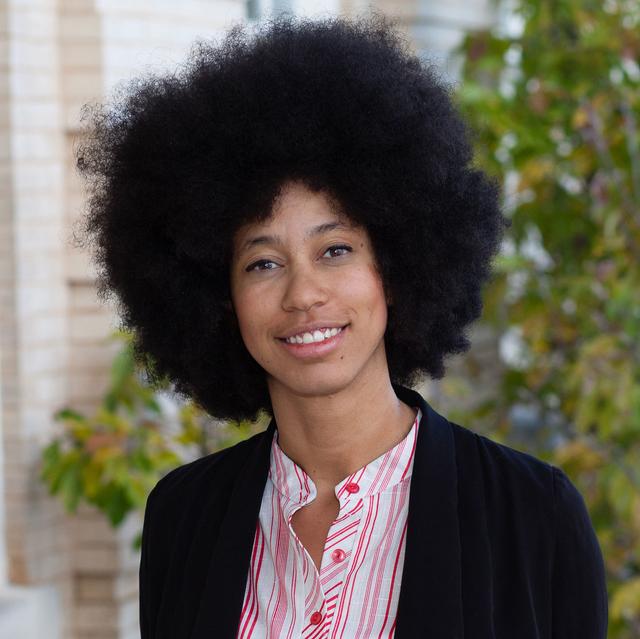
Talila A. Lewis is a multilingual abolitionist, artist, educator, writer, movement strategist, and community lawyer. Lewis was born into a family of educators, pastors, soldiers, dancers, musicians, artists, archivists. A proud legacy of the Black Southern griot and recitation traditions, Lewis is a prolific orator-signer-writer-storyteller.
As a Black queer disabled nonbinary person with roots in the Deep South who grew up all over the world (who sojourns incessantly & intentionally still), Lewis uses several spoken, written, and signed/tactile languages. As such, Lewis works, dreams, organizes, creates, and loves in between and across languages, borders, cultures, communities, and movements. In addition, The Black Church holds a special place for and to Lewis despite Lewis having long-since severed ties with organized religion. Recognized by Pacific Standard Magazine as a "Top 30 Thinker Under 30", Lewis has engineered and led innovative and intersectional social justice efforts that illuminate and address grave injustices within media, education, medical, and legal systems that have gone unaddressed for generations.
For the past twenty years, Lewis’s workthought has primarily focused on disrupting and abolishing the medical-carceral-impoverishment industrial complex; mapping past and present links between ableism and all other forms of oppression and violence (especially anti-Black/Indigenous racism and capitalism); and building power within and solidarity across multiply-marginalized communities. As the creator of the only national database of imprisoned deaf and blind people, Lewis spent nearly two decades advocating with and for hundreds of disabled defendants and incarcerated and returned people, including over ten years as the founding volunteer director of HEARD.
As one of the only people in the world who has worked on numerous wrongful conviction cases of deaf/disabled people, Lewis has litigated, testified, taught, trained, and presented around the world on these and related topics. Lewis has also served as consultant for dozens of organizations, law firms, universities, and corporations on race, class, disability, gender, language rights and justice. In 2023, after many years of dreaming, engineering, leading path-breaking intersectional grassroots advocacy on behalf of hundreds of disabled incarcerated people, including organizing successful long-term campaigns to free deaf/disabled Elders and wrongfully convicted people, Lewis “passed the torch” to the next generation at HEARD and entered a period of rest, recovery, reflection, and redefinition. Lewis’s body of work/thought has been applied toward liberatory ends by organizers, educators, advocates, and communities around the world.
Lewis also co-created the Disability Solidarity praxis; is a founding member of the Harriet Tubman Collective (and lead drafter of HTC's charter document, “Disability Solidarity: Completing the Vision for Black Lives); and served as the Givelber Public Interest Lecturer at Northeastern University School of Law and a visiting professor at Rochester Institute of Technology/National Technical Institute for the Deaf. A 2014 graduate of American University Washington College of Law, Lewis has received awards from numerous universities, the American Bar Association, Congresswoman Eleanor Holmes Norton, American Association for People with Disabilities, the Nation Institute, National Black Deaf Advocates, and EBONY Magazine, among others.
Lewis is a 2018 Roddenberry Fellow, a 2018 Atlantic Fellow for Racial Equity, and a 2023 Soros Justice Fellow.
Intertwined Struggles: No Justice Without Disability Justice
Disability is a natural part of the human experience. Histories of ableism shape how disability uniquely lives in the bodyminds of the present, but those histories are rarely unearthed. By contextualizing and exploring the racist-ableist roots of eugenics, white supremacy, enslavement, institutionalization and incarceration, we can identify how disability is implicated and/or excluded from our work.
Developing a more expansive understanding of disability and ableism will allow us to find ways to implement practices of Disability Justice to increase solidarity between more people and movements.
Introduction to Disability Justice
This workshop will explore the past and present nexus between racism, classism, ableism, and structural inequity, focusing in particular on multiply-marginalized people. We will work to expand our collective understanding of disability and how disability-based oppressions are implicated in and central to all social systems by contextualizing and exploring the racist-ableist roots of eugenics, white supremacy, enslavement, institutionalization and incarceration. We will discover how ableism in tandem with other oppressions continues to form and inform all social systems, including the criminal legal system. In addition to developing methods to implement disability justice into our movements, we will work to understand how undoing ableism is necessary for activism that seeks to engage with and center those at the margins of the margins.
Grounding Movements in Disability Justice
There are many gaps in conversations about COVID-19 and in general movements. These gaps pertain to disability, ableism and related issues+oppressions. Presenters will be contesting dominant notions and narratives about disability and ableism, offering historical perspectives on the construction and maintenance of disability and the connections between ableism and all forms of structural and systemic inequity (especially anti-Black racism), and providing insight on how to practice disability justice, among other things.
The Love to Liberation Pipeline: Disability Justice & Solidarity
Current education and legal systems continue to have devastating effects on marginalized communities. While many have come to recognize the cyclical violence these systems inflict on racialized communities, low-income and no-income communities and LGBTQ communities, far too little attention is paid to the injustices visited upon disabled and deaf communities, or to the link between these marginalized communities and the disabled identity. This, when disabled Youth are disproportionately targeted in school suspensions, arrests and expulsions; the foster “care” system; and within economically distressed communities. People with disabilities also represent more than half of the people killed by the police annually and are the largest minority group within our jails and prisons.
Dismantling the school to prison pipeline requires an intersectional approach that addresses varied causes of education inequity simultaneously.
Our collective failure to address trauma and disability experienced by our Youth contributes to cycles of violence within our communities and to our children being pushed out of out of school and into a penal system that only serve to further traumatize young people and pave the way to adult incarceration. Over-reliance on punitive discipline does not consider (and too often punishes) poverty, disability, race, trauma, and other lived experiences of our youth.
Mass Incarceration of Disabled, Deaf, Black & Poor
In recent years, there has been a concerted national effort to raise
awareness about and bring an end to end mass incarceration of People of Color and poor people. Despite the fact that disabled and deaf people make up a large percent of the United States incarcerated population, there has been very little national discussion about the impact of mass incarceration on disabled people–particularly disabled poor people and disabled People of Color. There has been an alarming increase in reports of police brutality against disabled and deaf people, and statistics revealing that students with disabilities are disproportionately among those youth caught up in what has recently been dubbed the “school to prison pipeline.” Not surprisingly, we have simultaneously seen a marked increase in exonerations of people with disabilities, raising grave concerns related to law enforcement’s disability cultural competence and public policy that criminalizes people with disabilities.
This presentation will draw connections between disabled, deaf, black and poor people’s experiences with mass incarceration, focusing in particular, on people with intersecting identities. Discussion will center around disabled and deaf people’s experiences with police brutality; the school to prison pipeline; wrongful arrests and convictions; disproportionately harsh punishment for alleged crimes or violations of regulations in court and prison contexts, respectively; and lack of access that leads to higher recidivism rates for these historically misunderstood and underserved populations. We will end by discussing action that can be taken to combat mass incarceration and to ensure that disabled and deaf people have equal access to the justice system.