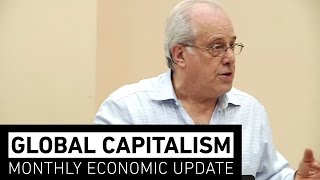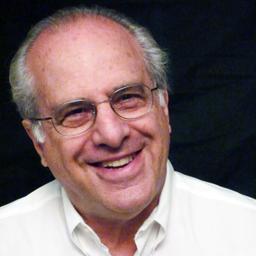

Richard D. Wolff is one of the most widely recognized economic thinkers in the United States today, an economist, professor, author, and public intellectual known for making complex economic ideas clear, urgent, and deeply relevant to everyday life. With decades of teaching, writing, and public engagement, he brings audiences into the heart of today’s economic debates with clarity, depth, and a rare ability to connect big systems to lived experience.
Professor Wolff is Professor of Economics Emeritus at the University of Massachusetts Amherst and a Visiting Professor in the Graduate Program in International Affairs at The New School in New York City. Over the course of his career, he has also taught at Yale University, the City University of New York, and the University of Paris (Sorbonne), building a global perspective on how economies function, and how they can change.
He is the co-founder of Democracy at Work, an organization dedicated to advancing conversations about economic democracy and workplace transformation. Through this work, he hosts the nationally syndicated program Economic Update, reaching audiences across radio, television, and digital platforms. His widely followed lectures, media appearances, and online series—including Ask Prof Wolff—have made him a trusted voice for people seeking to better understand inflation, inequality, debt, labor, and the shifting global economy.
A lifelong educator and compelling public speaker, Wolff is known for translating economic theory into practical insight. Whether addressing students, community groups, labor organizations, or public audiences, he invites people to rethink what the economy is, who it serves, and what alternatives are possible. His talks are grounded, engaging, and often provocative, equipping audiences not just with knowledge, but with the tools to question, analyze, and imagine new economic futures.
Wolff is the author of numerous books, including Understanding Capitalism, Understanding Socialism, Understanding Marxism, and The Sickness Is the System. His work, often developed in collaboration with economist Stephen Resnick, offers a fresh approach to political economy, one that centers class, power, and the structure of work while challenging traditional economic assumptions.